The History Of Art Blakey And The Jazz Messengers
Compilation

Compilation

When Art Blakey died on October 17, 1990, it caused many people to reminisce, especially those musicians on whom he had strongly impacted. Drummer Arthur Taylor who, at the helm of his Wailers, is quite an important elder statesman these days, was most passionate as he talked about Art. “He was such a big influence on me, personally as well as musically,” said A.T. “Al one point, when I was with Bud Powell in 1952, I was in a down mood and was thinking about giving up music and going back to school. Art was the guy who made me continue in music. He threatened me. ‘I’ll knock you out,’ he said. I wasn’t about to mess with Art Blakey.”
A.T. continued: “He had such a powerful personality. My mother, who died this year at age 92, suffered from Alzhcimer’s Disease. She went through periods of not communicating. One night I was hanging out with Art and it had turned into morning. At 12 noon I told him I had to go. ‘Where are you going?’ he said when I was about to leave. I explained that I had to take care of my mother. ‘I’ll go with you,’ he said.
“My mother was sitting in a wheelchair. She hadn’t spoken in weeks but when she saw Art she perked up. And for four days after that she was talkative. I don’t know if she recognized him. I think it was just the positive power of his personality.”
It was this very positive power that enabled Blakey to surmount many challenging situations: facing the gangster in his native Pittsburgh who told him, supposedly at gunpoint, to vacate the piano bench and let a kid sit down. (We don’t know the gunsel’s name but the pianist was Errol Gardner and that’s when Art switched to the drums.) ; surviving a head-bashing in Georgia, while a member of Fletcher Henderson’s orchestra, that left him with a silver plate in his skull; entering the boiling cauldron of the Billy Eckstine band in 1944 and emerging in 1947 (when that ahead-of-its-time colossus disbanded) as one of the main forces in jazz drumming; and weathering a period in the early 1950s when he was the house drummer at Birdland and had to play with so many diverse groups that he suffered a fever-inducing attack of nerves.
I first heard of Blakey when he was with Eckstine and eventually experienced his playing on the band’s exciting record of BLOWIN’ THE BLUES AWAY with its vocal by Billy and tenor battle between Gene Ammons and Dexter Gordon. I’ll always regret not going up to the Club Sudan on a Sunday afternoon to catch the band in person. Alired Lion of Blue Note did and became a Blakey fan for life.
It was on Blue Note that many people became aware of Art’s ability to coalesce so perfectly with Thelonious Monk; and also hear the first version of a Blakey-led band called the Messengers with Kenny Dorham and Walter Bishops Ir. among the sidemen. I imagine it was during his time with the Buddy De Franco quartet that I first met Art.
On December 17, 1951 he and Kenny Drew, who was also part oi the clarinetist’s group, were in a rhythm section for Sonny Rollins’ initial recording as a leader. This prestige date, a day before my 23rd birthday, was my first outing as an A&R man. It was not the most tranquil period in Sonny’s life and I remember how helpful Art was in steering the session toward as successful a conclusion as one could have hoped for under the circumstances on that snowy, sleety night in New York.
It was at the Annie Ross date for Prestige when she did TWISTED and FARMER’S MARKET (October 9, 1952) that someone asked Blakey about De Franco and what he thought Buddy’s ability to swing, the implication being that since he was white, Buddy really didn’t swing that much. I can still see Art bridling at the questioner and snapping back that not only was Buddy a great musician but a great man and leader.
Blakey, because of some of his negative experiences as a black man, could have easily become bitter and harvested a crop of racial hatred toward white people. However, Art was a wise man who saw beyond the ugly prejudice that dwells in small minds. You may have heard the story about the time Joanne Brackeen was with the Jazz Messengers on a southern tour. “Hey there Mr. Blakey,” a local called to him. “You know you got a white gal in the band.”
“No shit, I have to check that out,” replied Art. “I thought I had a piano player!” In February of 1954 Blakey led a quintet with Clifford Brown, Lou Donaldson, Horace Silver and Curly Russell for the famed A NIGHT AT BIRDLAND recordings. He and Silver had been associated from ’52. Later in ’54 the two, along with Kenny Dorham, Hank Mobley and Doug Watkins, formed a cooperative group which evolved into the Jazz Messengers thereby setting up the longest-running, traveling jazz college with an alumni as illustrious as its singular dean. In baseball, early on, it was John
McGraw, the manager of the New York Giants, who fostered the careers of many future managers. In jazz it was Blakey, whose sidemen went on to become leaders in their own right: Silver, Dorham, Mobley, Benny Golson, Lee Morgan, Freddie Hubbard, Bobby Timmons, Wayne Shorter, Cedar Walton, Jackie Mclean, Johnny Griffin, Chuck Mangione, Keith Jarrett, Woody Shaw, James Williams, John Hicks, Curtis Fuller, Bobby Watson, Mulgrew Miller, Donald Harrison, Terence Blanchard and, of course, the Marsalises.
When he died Blakey was well into his fourth decade of shaping ensembles, changing soloists, teaching his musicians bandstand smarts and encouraging them to bring in tunes and arrangements to help give each edition of the Jazz Messengers a distinctive identity. Silver, Golson, Timmons, Shorter, Fuller, Watson and Donald Brown have been among the major contributors.
Opportunities to solo were abundant on the bandstand of the Jazz Messengers. Blakey never chose to dominate with drum solos. Rather he established his presence with his tidal swing, benevolently prodding his minions with insistent cross-rhythms and apt accents. Despite his impaired hearing, from years of musical thunder, Art felt what was happening and, in turn, communicated with his young charges of the late ’80s and ’90s and the audience.
“I think one of his great contributions to modern drumming was his sense of dynamics,” Arthur Taylor says of Blakey. “tt was so well controlled. When he’d come out of that roll he could play soft or hard. lf it was soft, he would build to a crescendo. It had a tremendous effect. He was magical.”
He was also pragmatic and direct. One summer my wife, son and I were finishing our dinner in a hotel in Cagliari, Sardinia. It was nearing the time when the dining room was lo close. Art had just arrived from the Italian mainland and had come directly to the hotel from the airport. He was hungry. The waiter hovered, anxious to get the order. Art looked at the menu briefly and then addressed him: “Whatever you got back there in the kitchen-stop it from breathing and bring it out here.”
In the ’70s, when his group was not doing that well at the box office, he told me: “I just want lo get me a bunch of kids, and believe me, if I’m able to keep ’em together a year or two, I’ll take care of business. I don’t care how long the musicians have been playing, I’ll get these kids together. ‘Cause they’ve got the energy and they’ve got the love. And they will do it. Right now it has been financially infeasible. But like I always say, Ira, the money people worry about, I can’t worry about it, because I’ve never seen an armoured car following a hearse. Never. You don’t bring it here, you don’t take it out. So my thing is to have a ball and to have a good time.”
In his book, Jazz Masters of the Fifties, Joe Goldberg wrote of Blakey in the early ’60s, saying, “A jazzman, like an athlete, may he considered old when he is still in his thirties, and often a jazzman of Blakey’s age has already been forgotten or even dismissed.”
Until the end, it was Art who was doing the dismissing, with honors, of his charges when he had decided they were ready to leave the nest and fly on their own. They took with them a diploma bearing the approval seal of Blakey U. His own recordings and the legacy carried by his musical progeny are insurance against ever forgetting what Art Blakey, the man and musician, has meant to jazz. — Ira Gitler
Label: Blue Note– CDP 7 97190 2
Format: 3 x CD, Compilation
Released: 1992
1. THE THIN MAN (2:58) (Kenny Dorham)
SAHIB SHIHAB alto saxophone, MUSA KALEEM lenor saxophone, ERNIE THOMPSON baritone saxophone, KENNY DORHAM trumpet, HOWARD BOWE trombone, WALTER BISHOP piano, LAVERNE BARKER bass, ART BLAKEY drums
Recorded at WOR Studios in New York City on December 27, 1947. Recording Engineer: Doug Hawkins
2. QUICKSILVER (6:26) (Horace Silver)
LOU DONALDSON alto saxophone, CLIFFORD BROWN trumpet, HORACE SILVER piano, CURLY RUSSELL bass, ART BLAKEY drums
Recorded live at Birdland on February 21, 1954. Recording Engineer: Rudy Van Gelder
3. WEE DOT (6:45) (J.J. Johnson-Lco Parker)
LOU DONALDSON alto saxophone, CLIFFORD BROWN trumpet, HORACE SILVER piano, CURLY RUSSELL bass, ART BLAKEY drums
Recorded live al Birdland on February 21, 1954. Recording Engineer: Rudy Van Gelder
4. DOODLIN’ (6:44) (Horace Silver)
HANK MOBLEY tenor saxophone, KENNY DORHAM trumpet, HORACE SILVER piano, DOUG WATKINS bass, ART BLAKEY drums
Recorded at the Van Gelder Studio, Hackensack, New Jersey on December 13, 1954. Recording Engineer: Rudy Van Gelder
5. AVILA AND TEQUILA (12:11) (Hank Mobley)
HANK MOBLEY tenor saxophone, KENNY DORHAM trumpet, HORACE SILVER piano, DOUG WATKINS bass, ART BLAKEY drums
Recorded at the Cale Bohemia on November 23, 1955. Recording Engineer: Rudy Van Gelder
6. MINOR’S HOLIDAY (8:39) (Kenny Dorham)
HANK MOBLEY tenor saxophone, KENNY DORHAM trumpet, HORACE SILVER piano, DOUG WATKINS bass, ART BLAKEY drums
Recorded at the Cafe Bohemia on November 23, 1955. Recording Engineer: Rudy Van Gelder
7. LITTLE T (8:45) (Donald Byrd)
BILL HARDMAN trumpet, JACKIE McLEAN alto saxophone, SAM DOCKERY piano, SPANKY DeBREST bass, ART BLAKEY drums
Recorded in New York City on January 14, 1957. Produced by George Avakian for Pacific Jazz Records
8. MOANIN’ (9:30) (Bobby Timmons)
LEE MORGAN trumpet, BENNY GOLSON tenor saxophone, BOBBY TIMMONS piano, JYMIE MERRITT bass, ART BLAKEY drums
Recorded at the Van Gelder Studio, Hackensack. New Jersey on October 30, 1958. Recording Engineer: Rudy Van Gelder
9. BLUES MARCH (6:53) (Benny Golson)
LEE MORGAN trumpet, BENNY GOLSON tenor saxophone, BOBBY TIMMONS piano, JYMIE MERRITT bass, ART BLAKEY drums
Recorded at the Van Gelder Studio, Hackensack, New Jersey on October 30. 1958. Recording Engineer: Rudy Van Gelder
1. JUSTICE (7:33) (Thelonious Monk)
LEE MORGAN trumpet, BENNY GOLSON tenor saxophone, BOBBY TIMMONS piano, JYMIE MERRITT bass, ART BLAKEY drums
Recorded at Birdland on April 15, 1959. Recording Engineer: Rudy Van Gelder
2. DAT DERE (5:30) (Bobby Timmons)
LEE MORGAN trumpet, WAYNE SHORTER tenor saxophone, BOBBY TIMMONS piano, JYMIE MERRITT bass, ART BLAKEY drums
Recorded at the Van Gelder Studio, Englewood Cliffs, New Jersey on March 6, 1960. Recording Engineer: Rudy Van Gelder
3. LESTER LEFT TOWN (6:25) (Wayne Shorter)
LEE MORGAN trumpet, WAYNE SHORTER tenor saxophone, BOBBY TIMMONS piano, JYMIE MERRITT bass, ART BLAKEY drums
Recorded at the Van Gelder Studio, Englewood Cliffs, New Jersey on March 6, 1960. Recording Engineer: Rudy Van Gelder
4. A NIGHT IN TUNISIA (11:11) (Dizzy Gillespie)
LEE MORGAN trumpet, WAYNE SHORTER tenor saxophone, BOBBY TIMMONS piano, JYMIE MERRITT bass, ART BLAKEY drums
Recorded at the Van Gelder Studio, Englewood Cliffs. New Jersey in August, 1960. Recording Engineer: Rudy Van Gelder
5. PING PONG (7:00) (Wayne Shorter)
LEE MORGAN trumpet, WAYNE SHORTER tenor saxophone, BOBBY TIMMONS piano, JYMIE MERRITT bass, ART BLAKEY drums
Recorded al the Van Gelder Studio, Englewood Cliffs, New Jersey on February 18, 1961. Recording Engineer: Rudy Van Gelder
6. MOSAIC (8:09) (Cedar Walton)
FREDDIE HUBBARD trumpet, CURTIS FULLER trombone, WAYNE SHORTER tenor saxophone, CEDAR WALTON piano, JYMIE MERRITT bass, ART BLAKEY drums
Recorded at the Van Gelder Studio, Englewood Cliffs, New Jersey on October 2, 1961. Recording Engineer; Rudy Van Gelder
7. ARABIA (9:06) (Curtis Fuller)
FREDDIE HUBBARD trumpet, CURTIS FULLER trombone, WAYNE SHORTER tenor saxophone, CEDAR WALTON piano, JYMIE MERRITT bass, ART BLAKEY drums
Recorded at the Van Gelder Studio, Englewood Cliffs, New Jersey on October 2, 1961. Recording Engineer; Rudy Van Gelder
8. THREE BLIND MICE (8:17) (trad, arranged by Curtis Fuller)
FREDDIE HUBBARD trumpet, CURTIS FULLER trombone, WAYNE SHORTER tenor saxophone, CEDAR WALTON piano, JYMIE MERRITT bass, ART BLAKEY drums
Recorded at The Renaissance in Los Angeles in March, 1962. Recording Engineer: Wally Heiter. Produced by Alan Douglas for United Artists Records
1. UP JUMPED SPRING (9:45) (Freddie H tuhbord)
FREDDIE HUBBARD trumpet, CURTIS FULLER trombone, WAYNE SHORTER tenor saxophone, CEDAR WALTON piano, JYMIE MERRITT bass, ART BLAKEY drums
Recorded at The Renaissance in Los Angeles in March, 1961. Recording Engineer: Wally Heiter. Produced by Alan Douglas for United Artists Records
2. FREE FOR ALL (11:04) (Wayne Shorter)
FREDDIE HUBBARD trumpet, CURTIS FULLER trombone, WAYNE SHORTER tenor saxophone, CEDAR WALTON piano, REGGIE WORKMAN bass, ART BLAKEY drums
Recorded at the Van Gelder Studio, Englewood Cliffs, New Jersey on February 10, 1964. Recording Engineer: Rudy Van Gelder
3. WHEN LOVE IS NEW (01) (Cedar Walton)
LEE MORGAN trumpet, CURTIS FULLER trombone, WAYNE SHORTER tenor saxophone, CEDAR WALTON piano, REGGIE WORKMAN bass, ART BLAKEY drums
Recorded at the Van Gelder Studio, Englewood Cliffs, New Jersey on April 24. 1964. Recording Engineer: Rudy Van Gelder
4. THE EGYPTIAN (10:25) (Curtis Fuller)
LEE MORGAN trumpet, CURTIS FULLER trombone, WAYNE SHORTER tenor saxophone, CEDAR WALTON piano, REGGIE WORKMAN bass, ART BLAKEY drums
Recorded at the Van Gelder Studio, Englewood Cliffs, New Jersey on May 15, 1961
5. GERTRUDE’S BOUNCE (4:45) (Richie Powell)
WOODY SHAW trumpet, CARTER JEFFERSON tenor saxophone, CEDAR WALTON piano, MICKEY BASS bass, ART BLAKEY drums, TONY WATERS conga
Recorded at Fantasy Studios, Berkeley, California in March 1973. Recording Engineer: Jim Stem
6. JODI () (Walter Davis Jr)
VALERY PONOMAREV trumpet, BOBBY WATSON alto saxophone, DAVE SCHNITTER tenor saxophone, WALTER DAVIS piano, DENNIS IRWIN bass, ART BLAKEY drums
Recorded at Sound Ideas, New York City in February 1977. Recording Engineer: George Klahin. Produced by Fred Balin te Roulette Records
7. A WHEEL WITHIN A WHEEL (7:50) (Bobby Wilson)
VALERY PONOMAKEV trumpet, WYNTON MARSALIS trumpet, ROBIN EUBANKS trombone, BOBBY WATSON alto saxophone, BILL PIERCE tenor saxophone, BRANFORD MARSALIS baritone saxophone, KEVIN EUBANKS guitar, JAMES WILLIAMS piano, CHARLES FAMBROUGH bass, ART BLAKEY drums, JOHN RAMSAY drums
Recorded live at the Montreux Jazz Festival on July 17, 1980. Recording Engineer; Dave Richards. Produced by Wim Wigt for Timeless Records
Originally issued on “Live at Montreux and North Sea” (Timeless). Licensed from Timeless Records, B.V.
8. MS. B. C. (6:43) (Pamela Watson)
WYNTON MARSALIS trumpet, BOBBY WATSON alto saxophone, BILL PIERCE tenor saxophone, JAMES WILLIAMS piano, CHARLES FAMBROUGH bass, ART BLAKEY drums
Recorded at Studio Davoul in Paris on April 13, 1981. Recording Engineer: Philippe Cannes. Produced by Wim Wigt for Timeless Records
Originally issued on “Album Of the Year” (Timeless) licensed from Timeless Records, B.V.
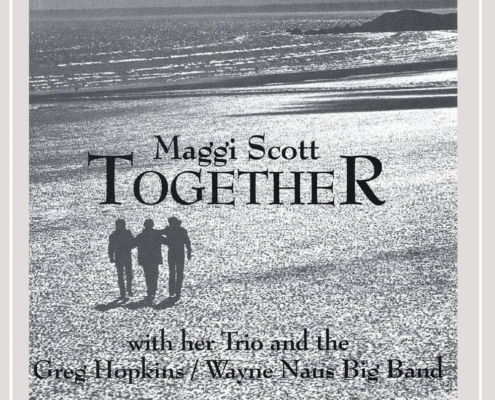 https://johnramsaydrummer.com/wp-content/uploads/2026/05/maggie-scott-together.jpg
1000
982
Lluchia56
https://johnramsaydrummer.com/wp-content/uploads/2026/03/john_ramsay_logo_main_gray.png
Lluchia562026-05-21 13:01:432026-05-22 09:52:11Maggie Scott – Together
https://johnramsaydrummer.com/wp-content/uploads/2026/05/maggie-scott-together.jpg
1000
982
Lluchia56
https://johnramsaydrummer.com/wp-content/uploads/2026/03/john_ramsay_logo_main_gray.png
Lluchia562026-05-21 13:01:432026-05-22 09:52:11Maggie Scott – Together https://johnramsaydrummer.com/wp-content/uploads/2026/04/until_further_notice.avif
2048
2048
Lluchia56
https://johnramsaydrummer.com/wp-content/uploads/2026/03/john_ramsay_logo_main_gray.png
Lluchia562026-04-17 12:20:142026-04-18 18:36:05Until Further Notice…
https://johnramsaydrummer.com/wp-content/uploads/2026/04/until_further_notice.avif
2048
2048
Lluchia56
https://johnramsaydrummer.com/wp-content/uploads/2026/03/john_ramsay_logo_main_gray.png
Lluchia562026-04-17 12:20:142026-04-18 18:36:05Until Further Notice…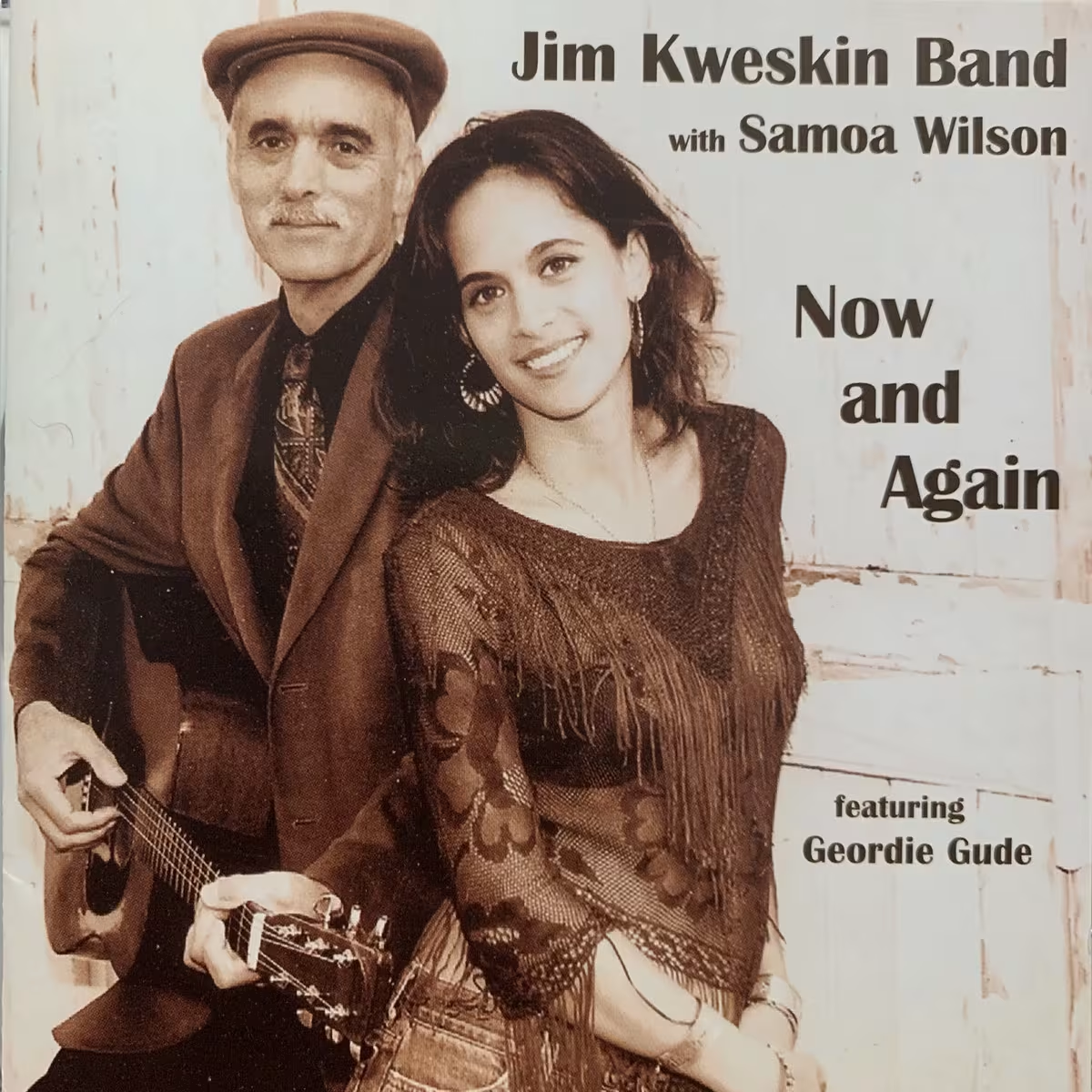 https://johnramsaydrummer.com/wp-content/uploads/2026/04/jim_kweskin_band_album_cover.avif
1200
1200
Lluchia56
https://johnramsaydrummer.com/wp-content/uploads/2026/03/john_ramsay_logo_main_gray.png
Lluchia562026-04-14 18:28:322026-04-17 12:55:56Jim Kweskin Band with Samoa Wilson – Now and Again
https://johnramsaydrummer.com/wp-content/uploads/2026/04/jim_kweskin_band_album_cover.avif
1200
1200
Lluchia56
https://johnramsaydrummer.com/wp-content/uploads/2026/03/john_ramsay_logo_main_gray.png
Lluchia562026-04-14 18:28:322026-04-17 12:55:56Jim Kweskin Band with Samoa Wilson – Now and Again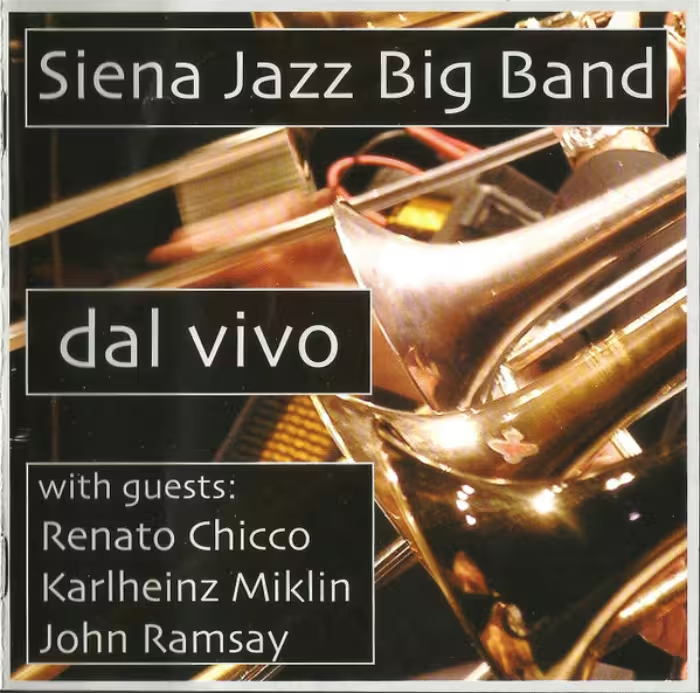 https://johnramsaydrummer.com/wp-content/uploads/2026/04/siena_jazz_big_band_dal_vivo.avif
693
700
Lluchia56
https://johnramsaydrummer.com/wp-content/uploads/2026/03/john_ramsay_logo_main_gray.png
Lluchia562026-04-06 10:57:062026-04-17 12:53:39Siena Jazz Big Band – Dal Vivo
https://johnramsaydrummer.com/wp-content/uploads/2026/04/siena_jazz_big_band_dal_vivo.avif
693
700
Lluchia56
https://johnramsaydrummer.com/wp-content/uploads/2026/03/john_ramsay_logo_main_gray.png
Lluchia562026-04-06 10:57:062026-04-17 12:53:39Siena Jazz Big Band – Dal Vivo https://johnramsaydrummer.com/wp-content/uploads/2026/04/love_at_sundown-big.avif
1404
1400
Lluchia56
https://johnramsaydrummer.com/wp-content/uploads/2026/03/john_ramsay_logo_main_gray.png
Lluchia562026-04-06 10:43:182026-04-17 13:23:04Billy Pierce Quintet – Bangkok Symphony Orchestra – Love At Sundown
https://johnramsaydrummer.com/wp-content/uploads/2026/04/love_at_sundown-big.avif
1404
1400
Lluchia56
https://johnramsaydrummer.com/wp-content/uploads/2026/03/john_ramsay_logo_main_gray.png
Lluchia562026-04-06 10:43:182026-04-17 13:23:04Billy Pierce Quintet – Bangkok Symphony Orchestra – Love At Sundown https://johnramsaydrummer.com/wp-content/uploads/2026/04/mcghee_could_it_be-big.avif
1404
1400
Lluchia56
https://johnramsaydrummer.com/wp-content/uploads/2026/03/john_ramsay_logo_main_gray.png
Lluchia562026-04-06 10:34:022026-04-17 12:48:40Andy McGhee – Could It Be
https://johnramsaydrummer.com/wp-content/uploads/2026/04/mcghee_could_it_be-big.avif
1404
1400
Lluchia56
https://johnramsaydrummer.com/wp-content/uploads/2026/03/john_ramsay_logo_main_gray.png
Lluchia562026-04-06 10:34:022026-04-17 12:48:40Andy McGhee – Could It Be https://johnramsaydrummer.com/wp-content/uploads/2026/04/arbuckle_no_more_no_les-big.avif
2048
2048
Lluchia56
https://johnramsaydrummer.com/wp-content/uploads/2026/03/john_ramsay_logo_main_gray.png
Lluchia562026-04-05 20:42:152026-04-17 12:59:13Les Arbuckle – No More No Les
https://johnramsaydrummer.com/wp-content/uploads/2026/04/history_art_blake-big.avif
1400
1400
Lluchia56
https://johnramsaydrummer.com/wp-content/uploads/2026/03/john_ramsay_logo_main_gray.png
Lluchia562026-04-05 18:32:332026-04-17 13:02:35The History Of Art Blakey And The Jazz Messengers
https://johnramsaydrummer.com/wp-content/uploads/2026/04/arbuckle_no_more_no_les-big.avif
2048
2048
Lluchia56
https://johnramsaydrummer.com/wp-content/uploads/2026/03/john_ramsay_logo_main_gray.png
Lluchia562026-04-05 20:42:152026-04-17 12:59:13Les Arbuckle – No More No Les
https://johnramsaydrummer.com/wp-content/uploads/2026/04/history_art_blake-big.avif
1400
1400
Lluchia56
https://johnramsaydrummer.com/wp-content/uploads/2026/03/john_ramsay_logo_main_gray.png
Lluchia562026-04-05 18:32:332026-04-17 13:02:35The History Of Art Blakey And The Jazz Messengers https://johnramsaydrummer.com/wp-content/uploads/2026/04/blakey_north_sea-big.avif
1404
1400
Lluchia56
https://johnramsaydrummer.com/wp-content/uploads/2026/03/john_ramsay_logo_main_gray.png
Lluchia562026-04-05 16:02:532026-04-17 13:08:57Art Blakey & The Jazzmessengers Big Band – Live At Montreux And Northsea
https://johnramsaydrummer.com/wp-content/uploads/2026/04/blakey_north_sea-big.avif
1404
1400
Lluchia56
https://johnramsaydrummer.com/wp-content/uploads/2026/03/john_ramsay_logo_main_gray.png
Lluchia562026-04-05 16:02:532026-04-17 13:08:57Art Blakey & The Jazzmessengers Big Band – Live At Montreux And Northsea The Complete Berklee
Drum Set Audition Course
 Extensions From The Teachings
of Alan Dawson Course
Les Arbuckle – No More No Les


